
Ant Control Services
Ants marching across your kitchen counter or trailing along baseboards already indicate that you have a colony somewhere in your property. Once house ants, pavement ants, or carpenter ants find food and moisture inside Richmond-area homes, they lay down pheromone trails and recruit more workers. If you’re wiping up lines of ants every day or seeing them return after store-bought sprays, it’s time for a real ant control plan.
When you call Lewis Pest Control & Wildlife Removal, we start with a photo-verified inspection of your home or business. We identify which ant species you’re dealing with, document trails, entry points, and moisture issues, and then build an environmentally responsible pest control for ants plan.
If you’ve been searching for ant control, pest control for ants, or an ant exterminator near me in the Greater Richmond area, our local team is ready to help. We live and work here too, and we’ll walk you through a plan that actually works.
Photo-Verified Inspections
Humane Removal
Local Pros
Ants Don’t Belong in Your Kitchen
Ant control has become one of the most common pest requests we see in the Greater Richmond area and across Central Virginia. As our seasons swing from damp springs to hot and humid summers, more people are asking how to get rid of ants in the kitchen, why they keep coming back to the same spot, and whether they should be worried about ants getting into wiring, insulation, or structural wood. Those are great questions, and we answer them in the sections below.
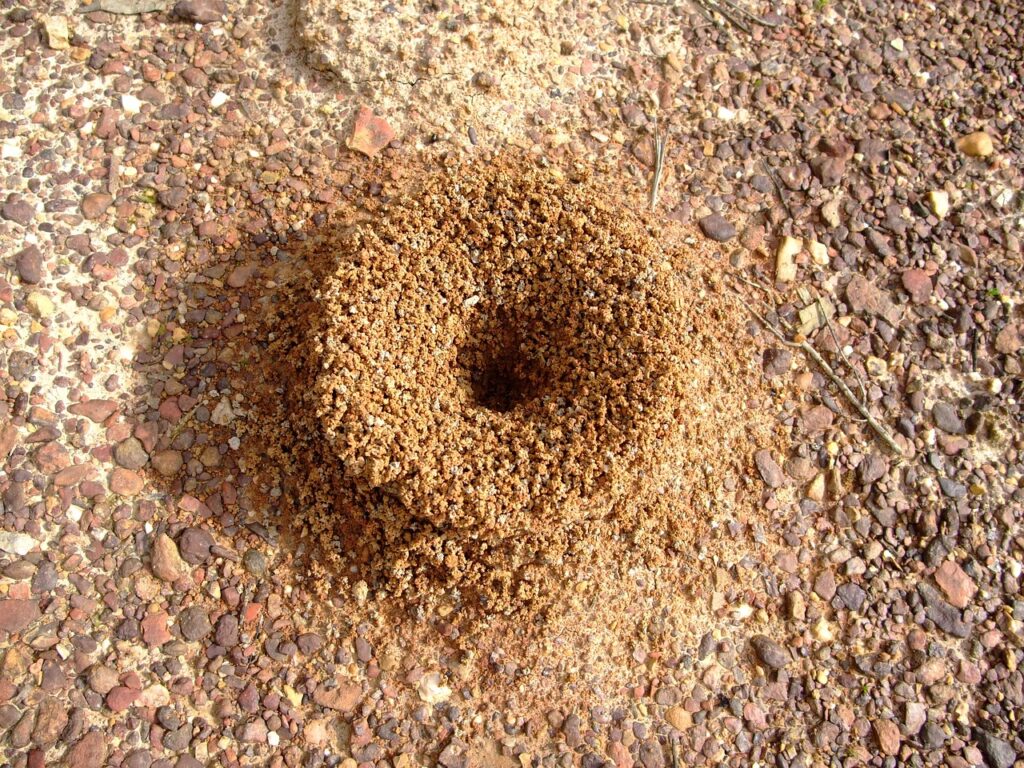
Understanding Ants in Greater Richmond
The ants you’re seeing aren’t wandering at random. Odorous house ants, little black ants, pavement ants, and carpenter ants all follow pheromone trails laid down by scouts who’ve already found what they’re looking for, things like crumbs, grease, pet food, sugar, or moisture. That’s why a single missed spill under the toaster or a damp area under the sink can turn into a steady highway of ants along your backsplash or baseboards.
Around the Central Virginia area, ant activity often ramps up after rain pushes them out of flooded soil, during summer heat when they’re chasing indoor moisture, and in the fall when outdoor food sources drop off.
In older brick homes and row houses, tiny gaps around windows, foundation lines, and utility penetrations give ants easy access. In newer neighborhoods with heavy mulch beds and slab foundations, pavement and Argentine ants can build large colonies right up against the house and slip in where concrete meets siding.
When people ask if ants are “just a nuisance” or something more serious, the honest answer is that it depends on the species and where they’re nesting.
Odorous house ants in the kitchen can contaminate food and are very good at setting up satellite colonies in wall voids and insulation.
Carpenter ants don’t eat wood the way termites do, but they hollow out damp wood to make galleries, which can worsen existing moisture and rot problems around windows, doors, decks, and rooflines.
Either way, if you’re seeing regular trails inside, the colony has already decided your home is worth the effort.
How to Get Rid of Ants Depends on Your Home
There isn’t one universal answer to ant control or pest control for ants. The right plan depends on which ant is present, how your home or business is built, and what’s attracting them.
For example, a second-floor condo with sugar ants in the kitchen needs a different approach than a Midlothian two-story with carpenter ants around a damp bay window, or a Short Pump home with ants trailing from mulch beds into a ground-level pantry.
In some situations, tightening sanitation and moisture, sealing entry points, and using professional baits is enough. In others, you need a broader exterior strategy that targets colonies in soil, mulch, or structural voids without over-treating living spaces.
Many people start by buying store sprays, wiping counters, and trying to “break the trail” themselves. What often goes wrong is that contact sprays kill a few workers on the surface but leave the queens and satellite colonies untouched.
In some cases, sprays can even cause colonies to bud and split, making the problem spread into more walls and rooms. That’s why DIY efforts sometimes seem to work for a few days, only for ants to return.
Our role is to step in with an inspection-first approach. We document how ants are using your home or business, identify the species, reduce what’s drawing them in, and then apply targeted treatments that use ant biology and trail behavior against the colony.
Whether you need a one-time service with no contract or ongoing protection, we build an ant control plan that fits your Richmond-area home and respects your family and pets.
Ant Control in Your Home or Business: The Lewis Process
We start every ant control job with a photo-verified inspection so you can see exactly what’s going on. That includes checking:
- Interior hotspots like kitchen counters and backsplashes, cabinet seams, under-sink areas, and pantries
- Warm voids behind and under refrigerators, dishwashers, and stoves where crumbs and grease build up
- Moisture zones, including window and door frames, bathrooms, laundry rooms, basements, and crawlspaces
- Exterior pressure points like foundation lines, expansion joints, mulch beds, slab cracks, and gaps where utilities, AC lines, or cables enter
You’ll see photos of ant trails, entry cracks, and conducive conditions so you understand why ants keep showing up before we ever talk about treatment.

Reduce what’s drawing ants in
The first step in effective pest control for ants is changing the conditions that make your property so attractive to a colony. We’ll walk you through steps you can take like tightening food storage, wiping up sugar and grease hotspots, managing pet bowls, and addressing moisture under sinks or in basements. Outside, we’ll look at mulch depth, vegetation touching the house, and where water collects along the foundation.
Target trails and the colony
Once we’ve mapped the problem, we build a species-specific treatment plan. For odorous house ants and other “sugar ants,” that usually means interior crack-and-crevice baits along trails, paired with exterior colony and perimeter work.
For carpenter ants, we focus on galleries in damp wood, structural voids, and exterior nesting areas.
Our approach is environmentally responsible and built around targeted placements instead of blanket spraying every surface. The goal is to use ant biology against the colony by letting foragers carry material back to queens and satellite nests.
Seal entry points and protect the structure
Ant control isn’t complete if the doors and cracks they’re using stay open.
As part of the process, we identify and recommend sealing gaps around utility lines, foundation cracks, window and door frames, and problem areas in basements or crawlspaces.
For carpenter ants, we’ll point out any moisture-damaged trim, decks, or siding that should be repaired.
Options for restaurants, offices, and multi-unit buildings
In restaurants, offices, and apartments, ants don’t respect unit boundaries. We can coordinate with managers or HOAs to address shared walls, trash areas, break rooms, and exterior pressure points.
If you’re not sure how to get rid of ants or you’ve been searching for an ant exterminator near me who will show you what’s really going on, the Lewis Pest Control & Wildlife Removal process gives you a local plan that actually goes after the colony.
One-Time Ant Removal Service (No Long-Term Contract Required)
Not everyone needs a year-round plan.
That’s why Lewis Pest Control & Wildlife Removal offers one-time ant control with no long-term contract required.
A one-time ant removal visit still includes our full service. You’ll get photo-verified findings and clear recommendations, so you understand what happened and what to watch for after we leave. If you decide later that you want ongoing protection, we can create a seasonal plan. If not, that’s fine too!
So, if you’ve been searching for an ant exterminator near me, our one-time ant removal service gives you a no-pressure option.

The Most Common Ants in Central Virginia
Understanding the type of ant is essential to knowing how to apply the correct ant control. These are the most common ant types in Virginia.
Odorous House Ants & Little Black Ants (“Sugar Ants”)
These are the tiny ants most people see in kitchens and bathrooms. They follow pheromone trails to anything sweet, greasy, or damp.
When you crush them, they often give off a “rotten coconut” or chemical smell.
They don’t eat wood or wiring, but they are masters at setting up satellite colonies in wall voids, insulation, and under floors.
Carpenter Ants
Carpenter ants are larger and their coloring is often black or black with some reddish tones. They most often show up around windows, doors, decks, or rooflines, especially where there’s moisture damage.
They don’t eat wood like termites, but they do tunnel through damp or softened wood to build galleries. Over time, that can worsen existing rot around trim, siding, and framing. If you’re seeing bigger ants in upstairs rooms, around a skylight, or near a deck ledger, it’s a different level of concern than a few sugar ants on the counter.
Yard Ants and Stinging Ants
Out in the yard, pavement ants and other turf ants build mounds along sidewalks, driveways, and patios. In some parts of Central Virginia, you may also encounter stinging ants in lawns or play areas. These species can track into garages, mudrooms, and first-floor rooms, but the bigger issue is bites and stings around bare feet, pets, or kids playing outside.
Not sure which kind you’re seeing? Our inspection-first ant control approach starts with photo-verified ID and a species-specific plan. That way, your search for “ant exterminator near me” ends with answers and ant solutions.
Why You Shouldn’t Ignore an Ant Problem
When you’re seeing regular trails in the kitchen, ants in the dishwasher, or winged ants near windows and lights, it’s a sign that a colony has invaded your property.
Odorous house ants and other small “sugar ants” contaminate food and surfaces as they move between trash, drains, and pantries, while carpenter ants are among the top wood-damaging ant groups in the U.S., costing homeowners hundreds of millions of dollars each year in control and repairs.
Odorous house ants and other kitchen species are constantly moving between trash, drains, pet bowls, and food prep areas. As they trail, they can contaminate food, dishes, and counters with whatever they’ve picked up along the way.
If you own or run a small restaurant, café, or commercial kitchen in the Richmond area, visible ant trails can also turn into health-inspection issues—Virginia health departments inspect food establishments several times a year, and active pests are treated as food-safety violations that must be corrected.
There’s also the “spread” factor. If the colony decides your kitchen is reliable, they’ll expand into wall voids, insulation, floor cavities, and around plumbing and wiring. What starts with a few workers near the sugar canister can turn into multiple trails in the pantry, bathrooms, and even bedrooms. Each round of over-the-counter spray may knock down what you see, but it can also scatter the colony, push ants into new areas, or cause budding where the colony splits and multiplies.
Waiting for ants to “move on” almost never works in the Richmond area because food, moisture, and shelter are all close together. As long as your home or business offers easy meals and hidden entry points, ants will keep using it.
If you’re already wondering whether you need ant control, searching for pest control for ants, or looking for an ant exterminator near me now is the time to act before a manageable problem turns into an ant infestation.
Our Ant Control Service Areas in Central Virginia
Searching for ant control, pest control for ants, or an ant exterminator near me? Our local team serves homeowners, renters, and small businesses across Greater Richmond, including:
- Richmond
- Chesterfield
- Henrico
- Glen Allen
- Midlothian
- Mechanicsville
- Short Pump
- Bon Air
- Tuckahoe
- Ashland
- Hanover
- Moseley
- Powhatan
- Rockville
- Goochland
- Petersburg
- Colonial Heights
- Hopewell
Don’t see your neighborhood listed? If it’s in Central Virginia, we’re nearby and ready to help.
Ant Control FAQs
What is the best way to get rid of ants in my kitchen?
The most effective way to get rid of kitchen ants is a bait approach that targets the colony.
Contact sprays and “ant killer” aerosols only hit foragers on the surface and can actually trigger some species to split into multiple colonies, which makes the problem spread into more walls and rooms.
How long does professional ant control take to work, and how long do results last?
Most homeowners start to see a noticeable drop in ant activity within a few days, but full control typically takes 1–3 weeks depending on the species and size of the colony.
With a bait-based program:
- You may see more ants at first as workers recruit others to the bait (that’s a good sign).
- Over the next 7–14 days, trails thin out as the colony declines.
- Follow-up visits let us re-bait active zones and verify the colony is actually collapsing.
Long-term results depend on keeping moisture, food, and entry points under control.
Is professional pest control for ants safe for my kids and pets?
Yes. That is, when it’s done the right way. Modern products are formulated for targeted use, and the biggest safety factor is how and where they’re applied.
Do I really need an ongoing contract, or can I get one-time ant control from a local ant exterminator?
You do not always need a long-term contract to solve an ant problem. Many national and regional companies push recurring plans as the only option.
However, Lewis Pest Control & Wildlife Removal is different. We offer:
- One-time ant control services with no contract if you’re dealing with a specific issue
- Ongoing service only if you want proactive coverage for multiple pests across the seasons
How do I know if I have carpenter ants?
Carpenter ants are bigger and tied more closely to moisture-damaged wood.
Signs point toward carpenter ants when you notice:
- Large black or black-and-red ants (often ¼–½ inch long) around windows, doors, decks, or rooflines
- Ant activity near damp or softened wood, like leaky window sills or porch posts
- Sawdust-like material (frass) pushed out of small openings in wood
- Rustling sounds inside walls or hollow-sounding trim in quiet rooms
Small odorous house ants and pavement ants are more often tied to food and moisture on surfaces and in cracks.
Call for Local Ant Control You Can Trust
One-Time Service Call
Quarterly Services
If you’re tired of wiping up the same ant trails or watching sprays only work for a week, it’s time to bring in a local team that actually lives in Greater Richmond. Lewis Pest Control & Wildlife Removal combines photo-verified inspections, targeted ant control, and an environmentally responsible approach that goes after the colony. Whether you want a one-time ant service with no contract or ongoing pest control for ants as part of a broader plan, we’ll walk you through exactly what you need and what you don’t.
Prices are determined by the size of the house, infestation, and area of service.
Service areas include Richmond, Midlothian, Chesterfield, Glen Allen, Mechanicsville, Tri-Cities and surrounding areas.