
Flea Exterminator and Flea Control
Your ankles are covered in itchy red bites, and you’ve noticed that dog won’t stop scratching. Or you’ve found fleas in the house, and you don’t even have pets. However it started, the fleas you can see are only a small part of the problem. Most of the population is eggs, larvae, and cocooned pupae hiding in carpet, bedding, and under your floors.
That’s why finding the source matters as much as the treatment. Sometimes it’s a pet. Sometimes it’s a raccoon or opossum living in the crawlspace, or fleas left behind by a previous owner’s animals.
Lewis Pest Control & Wildlife Removal starts every flea job with an inspection. If you’ve been searching for a flea exterminator near me or flea control near me, our local team can help.
Photo-Verified Inspections.
Humane Flea Control. Environmentally Responsible.
Local Pros. No Door-Knocking.
Finding Where Your Fleas Are Coming From
Treating fleas without knowing where they came from is how people end up paying for the same treatment twice. Before we treat anything, we want to know:
- Whether pets are bringing them in and whether they’re on a flea preventive from your vet
- Whether raccoons, opossums, or other wildlife are living under the house
- Whether an animal has recently died in a wall, crawlspace, or attic
- Whether the home has been vacant
- If the previous owner had pets
- Which rooms have the most activity
- Whether the yard is part of the problem
At Lewis Pest Control & Wildlife Removal, every flea job starts with a photo-documented inspection. Depending on the home, we look for:
- Flea dirt — pepper-like specks — on pet bedding, rugs, and furniture
- Adult fleas along carpet edges, under furniture, and in pet resting spots
- Eggs and larvae deep in carpet and bedding
- Gaps in crawlspace vents, foundation openings, and the spaces under decks and porches
- Signs of wildlife: droppings, tracks, nesting material, and disturbed insulation
- Shaded spots in the yard where pets lie down
- Confirmation that it’s actually fleas, since small jumping insects like springtails often get mistaken for them
The biggest thing we want homeowners to understand is that fleas are often a symptom of something else. Texas A&M’s extension guidance on managing fleas says wildlife living under or around a home needs to be trapped and removed before a proper flea treatment can be done. That means if a raccoon or opossum is living in your crawlspace, it keeps dropping flea eggs no matter how many times the house gets treated — which is why it matters that we handle wildlife removal too.
The same goes for pets. Adult fleas spend most of their time on the animal, so a house treatment will only work as long as your pets are being treated with flea medication at the same time.
Where Fleas in Your House Come From (Even If You Don’t Have Pets)
You’ve got fleas. But where did they come from?
The flea in almost every Central Virginia home is the cat flea — even in houses with only dogs, or no pets at all — and it feeds on wildlife just as happily as it feeds on pets.
Cat fleas will bite people, but they can’t keep a population going on human blood alone. So, if you have fleas, there’s an animal source somewhere, and finding it decides what the treatment plan looks like.
At Lewis Pest Control & Wildlife Removal, finding the source is the first thing we do. Out on calls in Central Virginia, here are the sources our technicians find most often:
Pets
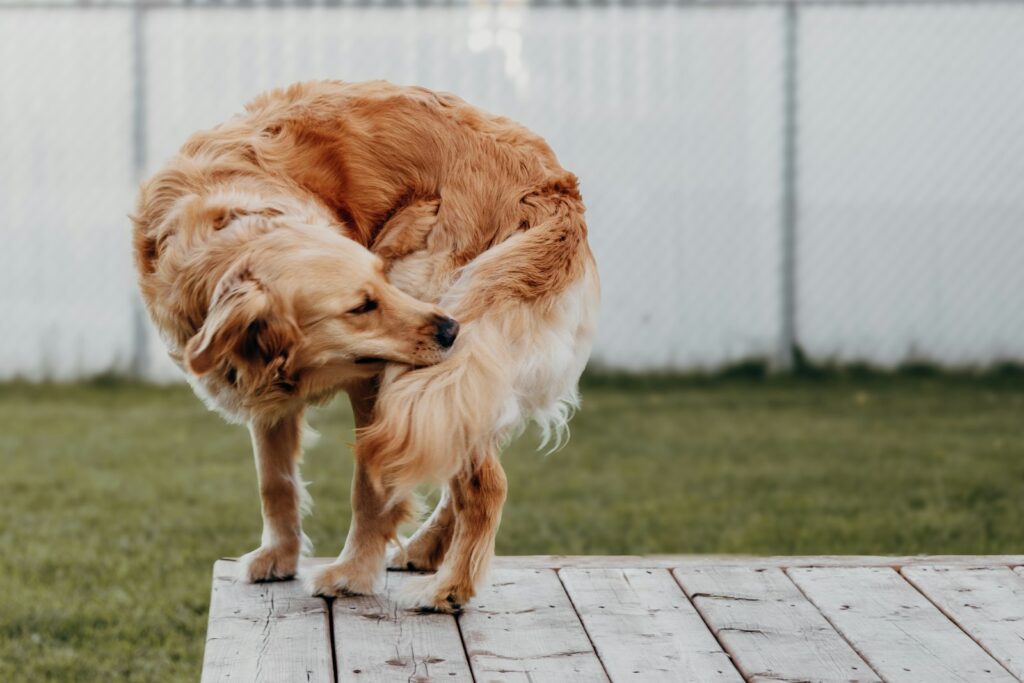
This is the obvious one, and it is the most common source. Dogs and cats pick up fleas in the yard, at the kennel, or from other animals, and while adult fleas stay on the pet, their eggs fall off into bedding, carpet, and furniture.
Look at your pet for flea dirt in its fur. Other signs include constant scratching. Then, take a look at your ankles for bite marks.
Modern flea preventives from your vet kill fleas before they can lay eggs. If your pets are on a preventive and you still have fleas, there’s a good chance the source is something else.
Wildlife under or in the house
Raccoons, opossums, squirrels, and stray cats living in crawlspaces, attics, or under decks and porches carry cat fleas. In fact, research has found urban wildlife carries them at higher rates than wildlife out in the country, so this is important to note if you live within the city of Richmond.
Rats and mice bring fleas in too. As long as the animal stays, it keeps dropping flea eggs in and around your home.
It gets worse when the animal leaves or dies. Its fleas go looking for the next host, and that’s often you, your kids, or your pets.
A house that has been vacant
Flea pupae will wait in their cocoons for months. They hatch when they sense vibration, warmth, and the carbon dioxide of a nearby host. That’s why people sometimes get swarmed the week they move into a new house, or the day they come home from a long trip. The fleas were there the whole time, waiting.
In these types of flea infestations, you’ll experience a sudden outbreak right after moving in or returning home from a long trip.
Visiting pets, used furniture, and the yard
Less common, but real. A visiting dog can leave eggs behind, used upholstered furniture can carry fleas, and shaded, damp spots in the yard where pets and wildlife rest can keep reintroducing them.
Why the source changes the plan
If your pets are the source, we treat the home and yard while your vet treats the pets. If it’s wildlife, the animal has to come out and the entry points must be sealed before any flea treatment, which is where our wildlife removal work comes in. If it’s dormant pupae in a house that has been vacant for a bit, the treatment has to be timed to catch them as they hatch.
If you’ve been searching for a flea exterminator near me because you’ve got fleas in the house, we are here to help.
Why You’ll Still See Some Fleas After Treatment
Don’t panic if you spot fleas a week after your treatment. That’s normal, and it means the treatment is working.
Flea pupae start inside a cocoon. That cocoon protects them from the initial treatment. They keep hatching for about two weeks afterward — a stretch known in the industry as the “pupal window” — and the fleas that emerge die once they contact the treated areas.
You can speed that up by vacuuming every day. The vibration coaxes pupae out of their cocoons sooner. Empty the vacuum outside immediately so you don’t carry anything back in.
That’s also why a follow-up visit is included. If you’re still seeing fleas 3-4 weeks after treatment, tell us — that usually means there’s a source we haven’t dealt with yet.
If you’ve been searching for flea control near me and you’re tired of DIY treatments that don’t work, call Lewis Pest Control & Wildlife Removal at 804-735-0100 to schedule an inspection.
A Flea Problem Shouldn’t Turn Into a Subscription
Got fleas? Call Lewis Pest Control & Wildlife Removal.
Plenty of companies treat a flea call as a chance to sign you up for a year-round plan. From our experience, most flea problems don’t need one. Once the source is handled and the life cycle is broken, the job is usually done. We do this for you with no long-term contract.
If you’ve been searching for a flea exterminator near me or flea control near me, call Lewis Pest Control & Wildlife Removal at 804-735-0100 to schedule an inspection.
Where We Provide Flea Control
If you’ve been searching for a flea exterminator near me and want a local team that can handle both the fleas and whatever’s bringing them in, Lewis Pest Control & Wildlife Removal is based right here in Chesterfield County and works throughout Central Virginia.
We hold the Virginia Commercial Nuisance Animal Permit and are members of the National Wildlife Control Operators Association and the Virginia Wildlife Damage Management Association, so when the source turns out to be a raccoon or opossum under the house, we can take care of that too.
We regularly provide flea control for homeowners, renters, landlords, and property managers in:
- Chesterfield
- Midlothian
- Bon Air
- Brandermill
- Woodlake
- Salisbury
- Moseley
- Chester
- Powhatan
- Richmond
- Henrico
- Glen Allen
- Short Pump
- Tuckahoe
- Mechanicsville
- Ashland
- Hanover
- Rockville
- Goochland
- Petersburg
- Colonial Heights
- Hopewell
Don’t see your neighborhood listed? If you’re anywhere in Greater Richmond, give us a call.
Questions and Statements We Hear About Fleas Before They Contact Us
You shouldn’t have to learn the flea life cycle, sort through hardware store sprays, or figure out which online remedies are safe for your pets. That’s our job, and we have been doing it for years.
Here’s what we hear most often from Central Virginia homeowners before they call us.
“I’ll set off a couple of flea bombs.”
Foggers are cheap and easy to use, which is why so many people try them first. Unfortunately, the University of Kentucky’s entomology department says foggers seldom solve indoor pest problems and can make them worse.
That’s because the mist settles on open surfaces and doesn’t reach under furniture or deep into carpet, where flea eggs and larvae are hiding. They’ve also caused house fires when people forgot about pilot lights, and a CDC report documented thousands of illnesses tied to them over just a few years.
“I sprayed with something from the hardware store.”
Most retail sprays kill the adult fleas. But adult fleas are only one part of the flea lifecycle. The eggs, larvae, and cocooned pupae in your carpet keep hatching and the flea infestation starts all over again.
“I found a natural flea remedy online.”
Be careful with this one. Some of the most popular “natural” flea remedies are dangerous to your pets. Never use tea tree oil for fleas — it’s toxic to dogs and cats. Unfortunately, even small amounts have killed pets.
“We gave the dog a flea bath, so we’re done.”
The bath kills the fleas on the dog that day. It doesn’t do anything to treat the eggs around your property or the larvae.
“We don’t have pets, so it can’t be fleas.”
It can and it does. In fact, we come across fleas during inspections all the time throughout our service area. There’s an animal source somewhere.
“We’ll leave for a few weeks and starve them out.”
This doesn’t work. Flea pupae will wait in their cocoons for months. People who try this often come home to a fresh wave and an even bigger flea infestation.
“We just moved in, and the house is full of fleas.”
That’s usually from the previous owner’s pets. Eggs and larvae left in the carpet develop into pupae while the house is empty. Once you move in, they hatch.
“The yard company already sprayed for fleas.”
A yard treatment can help if fleas are coming in from outside, but anything inside your home will be unaffected by it. If the fleas are inside, the inside must be treated. There is no way around it.
“They’ll die when it gets cold.”
Not in a heated house. Fleas indoors in the Central Virginia region will carry on during the winter and keep going until spring and beyond.
“It’s just itchy bites. How bad can it be?”
Flea bites make people miserable and pets miserable, but did you know that pets can get tapeworms from swallowing an infected flea while grooming? Even more, some dogs and cats develop an allergy to flea bites that leads to irritated skin.
“The fleas came back after the last company treated.”
Some fleas showing up for about two weeks after treatment is normal — that’s the pupae hatching. If you’re still seeing them three to four weeks later, the source probably wasn’t found. That’s often wildlife under the house, and it’s exactly what our inspection will find out.
“A guy came to the door and told me I need flea treatment.”
Nobody can diagnose a flea problem from your porch. Companies that send salespeople door to door are usually selling a package before they’ve looked at anything. Get a second opinion.
If you’ve been searching for a flea exterminator near me, Lewis Pest Control & Wildlife Removal is ready to help without the long-term contract.
Flea Control FAQs
How much does a flea exterminator cost in the Richmond area?
It depends on the size of your home, how bad the flea infestation is, and whether the yard needs treatment too. For a frame of reference, the Richmond-area averages at around $200-300. We’ll give you an exact price after we’ve looked at your home. Just remember, if the inspection shows wildlife under the house is the real source, removing it is a separate service — we’ll tell you that upfront so there are no surprises.
How do I get my house ready for flea treatment?
Before we come out, vacuum everything and seal the vacuum bag or canister contents in a trash bag and take it straight outside. Pick up clothes, toys, and anything else on the floor, and wash pet bedding with hot water.
Is flea treatment safe with kids and pets in the house?
Yes, but only when it’s done the right way. Everyone (including pets) should be out of the treated areas during the treatment and until it’s completely dry. If you have a baby or a toddler who spends time on the floor, it’s a common and sensible precaution to keep them and their toys off treated floors a little longer, and we’re glad to talk through any concerns before we start.
How do I know when the fleas are really gone?
The simplest check is the white sock test. Pull on a pair of white socks up to your calves and walk slowly around the rooms where you had the most activity, especially carpet and rugs. Fleas jump toward you, and they show up clearly against white. If you do that after the two-week hatching window and come up clean, that’s a good sign. Here are some other signs that the fleas in your house are gone:
- Your pets have stopped scratching
- No more flea dirt in their fur or bedding
- You’re not getting new bites
- Our follow-up visit confirms that the fleas have been eliminated
Fleas in the House? Let’s Find Where They’re Coming From.
Lewis Pest Control & Wildlife Removal treats the fleas and deals with whatever is bringing them in. We hold the Virginia Commercial Nuisance Animal Permit and belong to the National Wildlife Control Operators Association and the Virginia Wildlife Damage Management Association, so if the source is an animal under the house, we can handle that too.
Family-owned, based in Chesterfield County, and working across Central Virginia.
If you’ve been searching for a flea exterminator near me or flea control near me, call us at 804-735-0100 to schedule an inspection.