
Yes, mice chew wires, and yes, chewed wiring is dangerous. Mice gnaw through electrical insulation because their front teeth never stop growing and wiring happens to run right through the spaces where they nest. It is dangerous because once the insulation is stripped away, you’ve got exposed conductors sitting inches from dry wood framing and paper-backed insulation. That’s the setup for arcing, shorts, and even fires.
At Lewis Pest, we see chewed through wires all the time on our calls for mice control. That’s why we wrote this article. We’ll explain what to do if you come across chewed wires and how to tell if the damage is active or something that happened a few seasons ago.
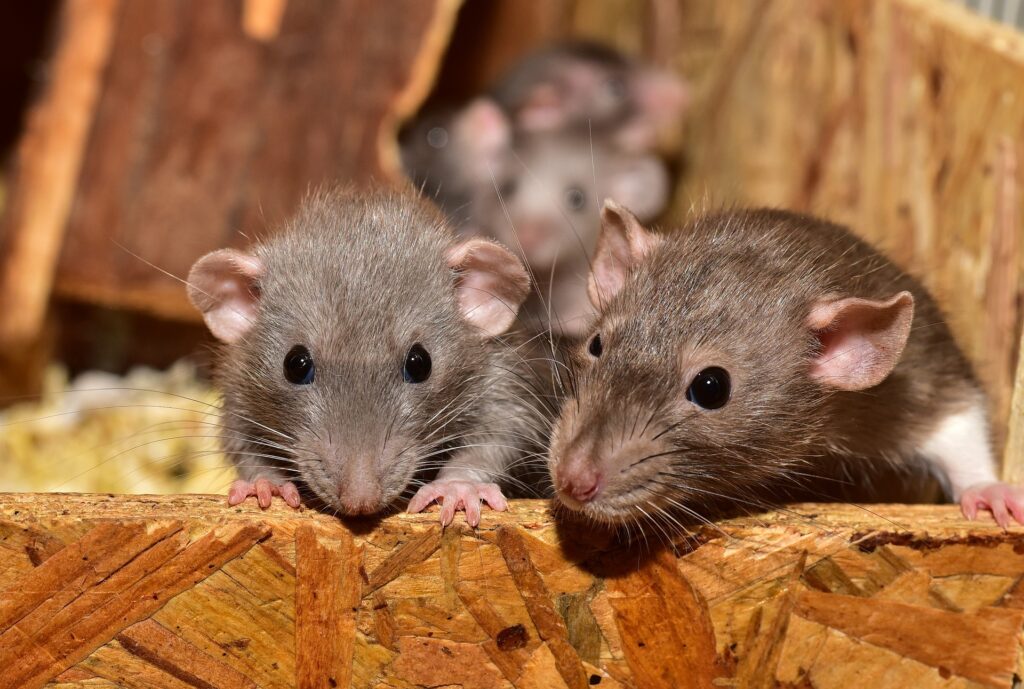
Why do mice chew wires?
Mice do this for three reasons. Our pest control technicians break it down for you below:
Their teeth never stop growing
A mouse’s incisors never stop growing. That means they need to always be gnawing on something to keep them filed down.
It’s not that they love wires or that wires provide some sort of improved filing. It just happens that wires are in the area and they make a nice place to gnaw. Wires have the ideal diameter for a mouse to grip and chew on, so when they can choose between a wire and a softer material, they will always choose the wire.
Wiring is near where mice live
Electrical cable gets strung through attics, wall voids, and crawlspaces. These are the same types of places that mice love! They chew on the wires because they are widely available.
The insulation makes good nesting material
Stripped sheathing gets carried off and worked into nests along with paper, fabric, and fiberglass.
Our technicians want to make it perfectly clear that mice do not eat wires. If you are searching the internet, you’ll see claims that wire insulation contains soy or other plant material mice find tasty. That is absolute BS.
Is chewed wiring dangerous?
Yes. We aren’t going to try to sugar coat it…there’s no version of exposed wire in a wall that’s fine to leave alone.
It’s a fire risk. When a mouse strips the insulation off a wire, it leaves bare conductor exposed. That creates the conditions for arcing and for a short. That produces heat and sparks, and in a place like a wall cavity that is made of dry wood, it can easily catch fire.
Even if it doesn’t start a fire, chewed wiring is going to cause a bunch of other issues. So, take note if you are experiencing repeated breaker trips on the same circuit or appliance issues due to an unstable current.
If you are experiencing these types of things, give us a call and we can come out and take a look to see if it is mice eating through wiring insulation.
How to tell if mice chewed your wiring
Rodent damage has a specific look.
Mouse gnawing leaves paired grooves – two parallel tracks from the upper and lower incisors. Look to see if the insulation is shredded or stripped in patches because those patches are a tell-tale mark of mice damage.
Look for mice droppings nearby. They will be small, dark, rice-shaped, about an eighth to a quarter inch. If you see mouse poop along with shredded nesting material, the wire damage is almost certainly created by mice. Another sign is a musky smell near the area.
Now, on the electrical side of things, pay attention to your low-voltage systems. If your doorbell camera drops offline intermittently or a smart thermostat that loses connection, those types of electronics run on thin control wiring that’s easy for a mouse to sever.
Where mice chew wires in a house
These are the areas where our pest team finds chewed wires most often. It doesn’t mean that these are the only places where it can happen, but these are definitely the areas to explore first.
Attics
Attics are the most common place to find wires chewed by mice. That’s because there is usually a bunch of cable runs across the tops of joints. Many attics have loose insulation, which makes it a perfect place for mice to bed down.
Chewed wires in attics are most common in mid-century Chesterfield ranches due to their low-pitch roofs and open attics.

Wall voids
Wall voids hide wiring, so that means the chewed wire damage is hidden as well. Wiring passes through studs alongside the vertical routes mice use to move between floors.
Near appliances
Behind and under appliances are inviting areas that are warm, dark, and close to food. That means they are perfect stopping places for mice. Mice nest there and chew the cords and connections within reach.
Crawlspaces
Crawlspaces put wiring at mouse level with nothing between it and the ground. We mostly see this issue in older homes withing the Richmond city limits. The way the foundation settles in the city gives mice gaps to enter.
Is the damage old or active?
Fresh damage means mice are in your house right now, living and breeding. Old damage means mice are a past problem…However, they left a hazard behind.
Signs it’s active
Look for exposed copper that still looks bright, gnaw marks with sharp edges, and fresh droppings nearby.
Signs it may be old
If the copper is dull or green, it has already oxidized. The other sign is droppings that are gray and dry. That means they have been there for a while.
The big thing here is that we don’t want you to believe that old damage is something that doesn’t need attention. It does, and it is still a major fire risk.
What to do if you found chewed wiring
How did you find it? Are you just looking now because you are reading this article or did you find it because you are catching whiffs of a burning plastic smell or see discoloration around an outlet? If it is the second two or anything of that sort, you need to stop everything you are doing and cut the power to that circuit at the breaker. You also need to call an electrician right now and leave that breaker off until they can inspect everything.
Now, if you found visible gnawing, but aren’t experiencing issues with the electricity, you don’t need to panic. However, you don’t want to wait it out either. You still want to call an electrician right now.
Then, call us. Electricians and pest control are two different trades, but for something like this, you’ll need both.
How to keep mice from chewing wires
The only way to protect your wires is to make sure that the mice are out of your home. To do that, you need to focus on exclusion.
Find every opening a quarter inch or larger and seal it with material mice can’t chew through.
Now you’ll see a ton of tips online showing DIY exclusion techniques. The problem is that they don’t work, or they don’t work for long. Steel wool packed into a gap and expanding foam sprayed over a hole both fail within a season.
If you head to the hardware store, you’ll see rows of rodent-repellent tapes and sprays. These might keep the mice out of certain areas of your home for a bit, but they do nothing about keeping them out of your home in the first place.
The truth is that many homeowners in the Central Virginia area need help with professional mice exclusion techniques. We find the gaps under exterior doors and seal off spots where pipes and utilities pass through the wall.

Mice in your walls? We can help.
If you’ve found chewed wiring, you’ve found evidence of a mouse problem that’s been going on for a while.
Lewis Pest Control & Wildlife Removal is here to help.
You can read more about how we handle mice on our mouse control page, or call us at 804-735-0100 to schedule an inspection.